When you own a home in Deer Park, you take pride in the quiet, tree-lined streets, the history, and the tight-knit sense of community. From the tidy neighborhoods near Center Street to the established homes closer to the San Jacinto Monument, our slice of Southeast Texas is a great place to plant roots.
However, beneath the surface of our beautiful lawns and concrete driveways lies a complex network of residential pipes that faces a unique set of regional challenges. The combination of Texas Gulf Coast humidity, specific local soil geology, and aging sewer systems means that a clogged drain here is rarely just a simple inconvenience. It is often a symptom of something much more specific to our geographic footprint.
At Pasadena Plumbing Services, we have spent years clearing sluggish pipes and fixing backup emergencies for our neighbors right next door in Deer Park. We know the unique structural personalities of the houses built here from the 1950s onward.
This comprehensive guide breaks down exactly why Deer Park drains clog so frequently, how to spot a minor nuisance before it becomes a major backup, the truth about DIY fixes, and how our professional drain solutions keep your home running smoothly.
Part 1: Why Deer Park Drains Face a Unique Struggle
To truly understand why your kitchen sink or master shower keeps backing up, you have to look outside your house. A home’s plumbing system does not exist in a vacuum; it interacts constantly with the environment around it. In Deer Park, three major local factors create a perfect storm for persistent drain blockages.
The Heavy Beaumont Clay Soil Under Our Feet
The entire Houston ship channel region sits on top of highly expansive clay, scientifically categorized as Beaumont clay. This soil acts like a giant, slow-moving sponge. During our brutal, dry summer months, the clay loses moisture, shrinks, and pulls completely away from slab foundations and buried sewer lines. When the torrential Gulf Coast rains arrive, that same clay absorbs moisture rapidly, swells up, and exerts thousands of pounds of pressure against anything buried within it.
This constant, seasonal tug-of-war causes the ground to shift continually. For your drainage system, this movement is catastrophic. As the earth moves, buried cast iron, clay, or early PVC sewer lines can belly, which means a section of the pipe sags downward, creating a permanent low spot where standing water and solid debris pool. In worse cases, the shifting soil shears pipe joints entirely, allowing dirt to cave into the line and form an impassable barrier that blocks everything you flush down your drains.
Mature Trees and the Search for Water
Deer Park is famous for its beautiful, mature live oaks, pecans, and pines that shade our older neighborhoods. However, a tree’s root system extends far wider than its branches above ground. During long summer dry spells, these root systems grow incredibly aggressive in their search for moisture and nutrients.
Your sewer lateral line—the underground pipe that connects your home’s indoor plumbing to the City of Deer Park’s main sewer trunk line—is a primary target. As warm wastewater flows through your pipes, it releases vapor into the surrounding soil. Tree roots sense this moisture and follow it directly to the source.
If your home was built several decades ago, your sewer line likely features cast iron or clay pipes connected by joints that degrade over time. The tiniest hairline crack or loose joint is all a microscopic root hair needs to slide inside. Once inside the pipe, the root thrives on the continuous supply of water and organic waste, growing into a massive, fibrous web that acts like a net, trapping hair, wet wipes, and grease until your main line shuts down completely.
The Structural Reality of Aging Infrastructure
Depending on which part of Deer Park you live in, your home could have been built anywhere from the mid-20th century to the master-planned developments of recent years. Homes built before the 1980s almost universally relied on cast-iron pipe systems for indoor drain lines and underground sewer mains.
Cast iron has a definitive lifespan. Over decades of constant exposure to water and household chemicals, the interior of a cast-iron pipe does not remain smooth. It undergoes a process called tuberculation, where internal corrosion builds up, creating a rough, jagged, bark-like texture along the inside walls of the pipe.
When the interior of your plumbing lines becomes rough and pitted, it catches everything passing through. Strands of hair from the shower, small food particles from the kitchen sink, and toilet paper no longer slide cleanly out to the city main. Instead, they catch on the rusted ridges, accumulating layer by layer until the diameter of the pipe is completely restricted.
Part 2: The Most Common Types of Household Clogs
Not all drain clogs are created equal. Different fixtures in your home handle different types of debris, meaning the solution for a kitchen backup is entirely different from what is required to fix a standing pool of water in your guest shower.
Kitchen Sinks: The Threat of FOG (Fats, Oils, and Grease)
The kitchen sink is the culinary heart of your home, but it is also the most abused drain on the property. The single biggest cause of kitchen drain blockages is a trio known in the plumbing industry as FOG: Fats, Oils, and Grease.
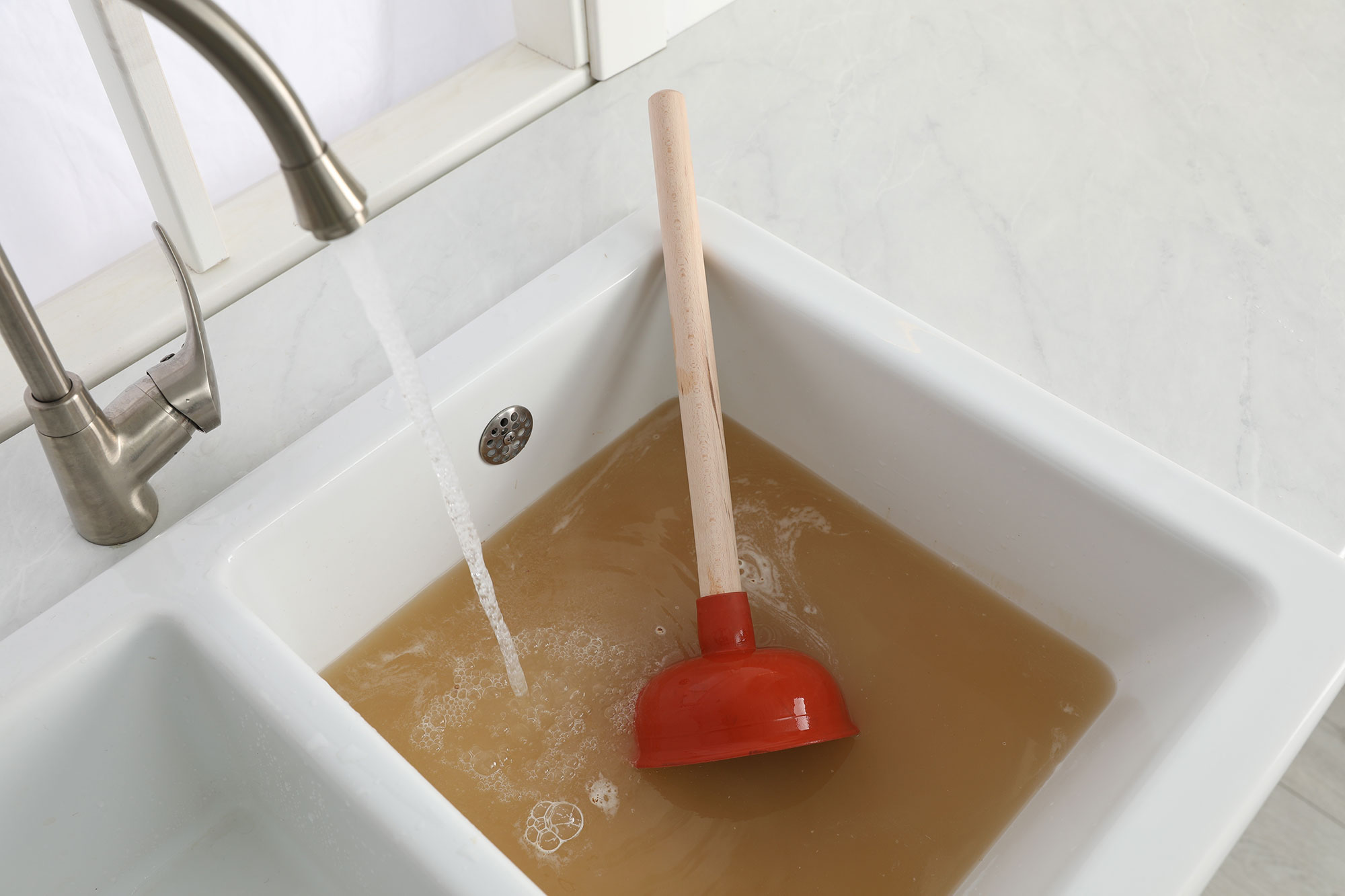
When you cook bacon, brown ground beef, or pour leftover cooking oil down the sink, it may look like a harmless liquid while it is hot. However, the moment that grease hits the cold water and dark interior pipes beneath your kitchen floor, it cools rapidly and solidifies into a thick, waxy paste. This grease paste lines the walls of your pipes, catching coffee grounds, small bits of food from the garbage disposal, and soap scum. Over time, the opening inside the pipe shrinks until it is the size of a drinking straw, causing your sink to fill with dirty water every time you run the faucet.
Bathroom Drains: Hair, Soap Scum, and Grooming Products
Bathroom sink, tub, and shower drains face a different antagonist: human hair combined with binding agents. Every time you wash your hair, shave, or apply heavy lotions and body washes, those materials head down the drain together.
Strands of hair naturally catch on the mechanical pop-up stoppers or strainer grates inside your fixtures. When you mix long strands of hair with sticky bar soap scum, thick conditioners, and toothpaste, they form an incredibly tough, rope-like binder. This mass behaves similarly to reinforced concrete inside your pipes, anchoring itself to the drain walls and refusing to budge without direct mechanical removal.
Toilets and the Myth of the “Flushable” Wipe
Your toilet is designed to handle only two things: human waste and toilet paper. Toilet paper is engineered to dissolve completely within seconds of hitting water, allowing it to flow smoothly through your home’s bends and turns.
In recent years, the explosion of wet wipes, baby wipes, and cleaning wipes labeled as “flushable” has become the primary cause of emergency toilet and main sewer line backups in Deer Park. The plain truth is that flushable wipes do not dissolve. They are made of synthetic, woven fibers designed to stay strong when wet. When you flush them, they travel down into your sewer lines intact. If they encounter a rough patch of cast iron or a tiny tree root intrusion, they snag, creating a trap that catches every subsequent wipe and piece of waste until sewage begins backing up into your lowest household fixtures.
Part 3: Signs Your Sewer Line Is Heading for a Emergency
A total plumbing failure rarely happens completely out of nowhere. Your home will almost always give you subtle warnings that a major drain blockage is forming deep within the system. Recognizing these signs early can save you thousands of dollars in water damage restoration and emergency repair fees.
Multiple Fixtures Backing Up Simultaneously
If only your master bathroom sink is draining slowly, the clog is likely isolated to that specific sink’s small P-trap. However, if you run your washing machine and suddenly notice soapy water bubbling up into your master shower floor, or if you flush your toilet and water rises into the adjacent bathtub, you are dealing with a mainline sewer blockage. Because the main path out to the street is blocked, wastewater seeks the lowest open point of entry inside your house, which is almost always your tub or shower basin.
Strange Noises and Gurgling Drains
Your plumbing system relies on a delicate balance of water and air pressure, regulated by vent pipes that exit through your home’s roof. When a significant clog begins to constrict a drain line, it cuts off the smooth passage of air. As water struggles to pass by the blockage, it forces air backward through the system, creating a distinct glug-glug or bubbling sound from your toilets or sinks. If your toilet gurgles or bubbles completely on its own when you aren’t using it, a blockage is actively shifting or compressing air in your main line.
Persistent Foul Odors
A properly functioning drain system is sealed by water traps designed to keep sewer gases out of your living space. If you notice a persistent smell of rotting organic material or raw sewage coming from your drains, it means waste is trapped inside the pipes and unable to clear. This occurs when food particles rot within a thick grease clog or when sewage builds up behind a root intrusion right outside your home’s foundation.
Part 4: The Hidden Dangers of DIY Drain Cleaning
When faced with a sink full of dirty, standing water, the immediate impulse for many homeowners is to run to the nearest big-box hardware store near Highway 225 to grab a quick, cheap fix. Unfortunately, the most common DIY methods often cause far more damage to your home than the clog itself.
The Truth About Chemical Drain Cleaners
Liquid drain cleaners are highly caustic chemical compounds, typically formulated with sodium hydroxide (lye) or sulfuric acid. They work by generating intense chemical heat to dissolve grease and organic matter.
While this might temporarily melt away a small clog, it creates severe problems for your plumbing infrastructure:
- For older cast-iron or galvanized steel pipes: The harsh acid eats away at the already weakened metal walls, causing thin spots to crack and leak raw wastewater behind your walls or under your foundation.
- For modern PVC pipes: The extreme heat generated by the chemical reaction can soften, warp, and deform plastic pipes, melting glued joints apart and creating hidden leaks.
- For your safety: If the chemical fails to clear the clog, you are left with a sink or basin full of highly corrosive, toxic water. If a professional plumber has to come in afterward, snaking that drain sprays dangerous acid onto the technician and your bathroom surfaces.
The Risks of Improper Plunging and Unskilled Snaking
Plunging is a great first step, but using the wrong tool or excessive force can backfire. Standard flat cup plungers are meant for sinks, while bell-shaped or accordion-style plungers are designed specifically for toilets. If you plunge a toilet with too much aggressive pressure, you can rupture the wax ring seal beneath the base of the toilet, leading to hidden sewer water leaks that rot out your subfloor over time.
Similarly, renting a large, motorized mechanical drain snake without professional training is highly risky. An inexperienced operator can easily twist the heavy steel cable into a knot inside the pipe, snapping it off entirely and leaving a massive piece of metal trapped inside your sewer line. Additionally, if your home has older, fragile pipes, an aggressive snake can punch right through the side of an underground line, turning a simple cleaning job into an immediate, extensive excavation project.
Part 5: How Pasadena Plumbing Services Clears the Way
When you call us to handle a drain issue in Deer Park, we don’t just guess where the problem is or stick a temporary band-aid on it. We use an advanced, multi-step diagnostic and clearing process to ensure your drains flow freely for the long term.
High-Definition Fiber-Optic Camera Inspections
We believe in complete transparency, which is why we always begin complex or recurring drain evaluations with a high-definition sewer camera inspection. We insert a flexible, waterproof fiber-optic camera directly into your home’s cleanout access point. As the camera travels through your pipes, it transmits a real-time color video feed to a monitor, allowing us to see exactly what is causing the issue.
This technology eliminates all guesswork. We can show you exactly where the pipe has settled, locate the specific root intrusion, or identify if a cracked line requires repair. This means we only target the precise area that needs help, keeping our services efficient and cost-effective.
Heavy-Duty Mechanical Snaking
For localized blockages consisting of hair, thick paper products, or stubborn debris, our team utilizes professional-grade, motorized drain augers. These machines feature specialized steel cutting heads tailored to the specific type of clog you have. Our licensed plumbers navigate these cables through your drainage lines carefully, chewing through structural blockages and scraping pipe walls clean without risking the structural integrity of your plumbing.
Hydro Jetting: The Ultimate Solution for Restoring Pipes
If our camera inspection reveals that your underground main line is heavily impacted by tree roots or thick, solidified layers of grease, standard mechanical snaking is often only a temporary fix. To truly clean the pipe and restore its full interior diameter, we recommend hydro jetting.
Hydro jetting uses a specialized machine that pumps water through a heavy-duty hose at pressures up to 4,000 PSI. The nozzle at the end of the hose features forward-facing and rear-facing microscopic water jets. As the hose moves through your pipe, it acts like a laser, blasting away grease, pulverizing tree roots, and washing away decades of scale buildup. Hydro jetting doesn’t just poke a hole through a clog; it restores the interior of your existing pipes to like-new condition, making it much harder for debris to catch and form a new blockage in the future.
Part 6: Proactive Maintenance to Keep Your Drains Flowing
Once your plumbing system has been professionally cleared, you want to keep it that way. Implementing a few simple habits can drastically reduce the chances of ever having to deal with a stressful sewer backup again.
Proper Disposal of Kitchen Waste
The simplest rule for your kitchen is to treat your garbage disposal as a tool for cleaning up accidental small food scraps, not a trash can. Avoid putting fibrous vegetables like celery, corn husks, onion skins, and potato peels down the disposal, as their strings wrap around the blades and jam the motor.
Always wipe down greasy pans with a paper towel before washing them in the sink. If you do have liquid cooking oil or bacon grease, let it cool completely in an empty tin can or jar, then discard it directly into your household trash can.
Install Inexpensive Mesh Drain Strainers
For a few dollars at any local hardware store, you can purchase stainless steel or silicone mesh strainers for all your bathroom sinks, tubs, and showers. These simple devices sit over your drain openings and catch hair, soap chunks, and small jewelry before they ever enter your plumbing lines. Cleaning out a mesh strainer once a week takes thirty seconds and completely prevents hair from weaving into an underground clog.
The Power of the City’s First-Look Policy
An excellent tip for Deer Park residents involves leveraging your local municipal resources. The City of Deer Park Wastewater Maintenance Division maintains an excellent policy for residents experiencing sewer issues. If you notice a complete backup, the city requests that you call their municipal wastewater line at 281-478-7270 during normal business hours (or the non-emergency police dispatch line after hours) before you call an outside service company. The city will dispatch a crew to check the main municipal trunk line in your street or alleyway. If the backup is caused by a blockage in the city’s main line, they will clean it out immediately at no charge to you. If they find that the city main is flowing completely clear, they will let you know right away, meaning the blockage is isolated within your private residential property line—at which point our team at Pasadena Plumbing Services is ready to step in
Your Trusted Partner Across the Deer Park Community
A clogged drain is frustrating, dirty, and stressful, but you don’t have to tackle it alone. Whether you are dealing with a slow-draining kitchen sink on a Tuesday afternoon or a full mainline sewer backup on a Saturday night, Pasadena Plumbing Services is proud to provide prompt, reliable, and licensed plumbing services to our neighbors throughout Deer Park.
We believe in upfront, transparent pricing, state-of-the-art diagnostic tools, and long-lasting repair work. We live and work right down the road, and we know exactly what it takes to keep Southeast Texas plumbing lines working beautifully under any conditions.